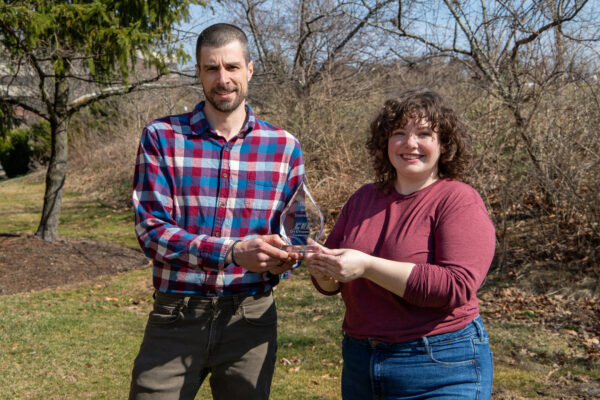
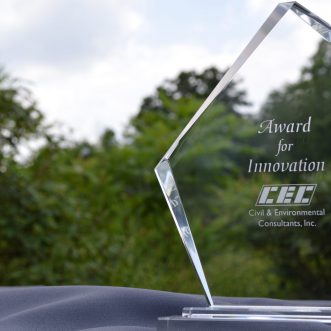
It’s been said many times that necessity is the mother of invention — and for the winners of a 2024 CEC Innovation Award, that couldn’t be truer.
The award-winning solution? The Bailer Retrieval Assistance Device, a clever DIY tool designed to ease the physically demanding process of groundwater sampling. Created by Nate Alexander, Technician II, and Laura Edwards, Project Scientist, both part of CEC Athens’ Environmental practice, the device was born out of a real-world challenge: how to make hand-bailing less strenuous and more efficient.
Faced with the prospect of manually pulling a 2-inch bailer from depths up to 150 feet — multiple times per gallon — Laura, recovering from a shoulder injury, teamed up with Nate to engineer a better way. Using simple hardware store materials and a power drill, they built a device that not only reduced physical strain but also improved sampling speed, safety, and water quality.
Why This Bailer Tool Is a Fieldwork Game-Changer
- Reduces Physical Strain
Manual bailing is tough on the body. This device takes the load off, making sampling more accessible for people with injuries or limited mobility. - Saves Time in the Field
Faster retrieval means more wells can be sampled in less time, improving overall efficiency during large-scale events. - Improves Sample Quality
Smooth, consistent movement reduces sediment disturbance and helps maintain the integrity of the water sample by preventing disruption of the bead seal at the bottom of the bailer. - Minimizes Contamination Risks
By keeping the bailer rope off the ground, the device helps avoid contact with dirt, debris, and potentially contaminated surfaces. It also prevents tangles and knots, which are especially problematic in cold weather when ropes can freeze. - Easy to Clean and Decontaminate
Built with simple, non-porous materials, the device is easy to wipe down and sanitize between uses — an essential feature for sites with strict contamination protocols.
Innovation Doesn’t Have to Be High-Tech
This DIY bailer retrieval tool is a great example of field-driven innovation. It didn’t come from a lab or a manufacturer. It came from people who understood the problem firsthand and found a practical, affordable solution. It’s proof that sometimes, the best tools are the ones you build yourself.


Post a Comment