Owner/Client
Indiana Office of Adjutant General
Location
Johnson/Bartholomew/Brown Counties, IN
CEC Services
- Threatened & Endangered Species Surveys
- Wildlife Surveys
Owner Objective
Camp Atterbury is a federally owned military training site operated by the Indiana National Guard. It is located on approximately 35,000 acres near the town of Edinburgh in Johnson, Bartholomew, and Brown counties, Indiana. CEC was retained by Camp Atterbury to perform acoustic, mist-netting, and radio-telemetry bat monitoring surveys to provide further information and facilitate informed natural resource and military management decisions regarding five species of bats that are currently federally listed or are being considered for listing.
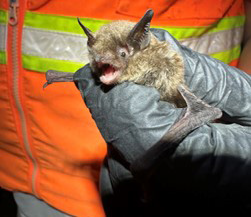
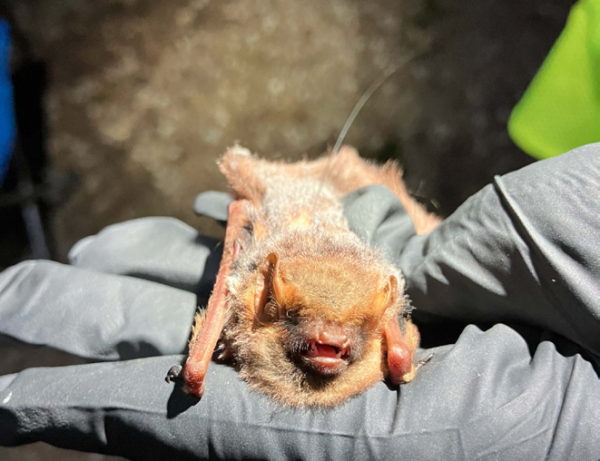
The main goal of this effort was the identification of maternity colonies, primary and alternate roosts, and primary foraging habitat of state and federally listed or potentially listed species including the northern long-eared bat (Myotis septentrionalis), tricolored bat (Perimyotis subflavus), Indiana bat (Myotis sodalis), little brown bat (Myotis lucifugus), and evening bat (Nycticeius humeralis).
CEC Approach
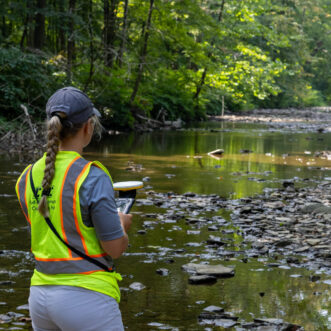
CEC provided ecological consulting services at the Camp Atterbury training complex in the form of bat acoustic monitoring, mist netting, roost telemetry, and foraging telemetry surveys completed between June and July 2024. While performing these surveys, the CEC team coordinated daily with Camp Atterbury Natural Resources personnel and site operations/range control to avoid active training areas. CEC deployed multiple acoustic detectors throughout Camp Atterbury to record bat calls within the study area.
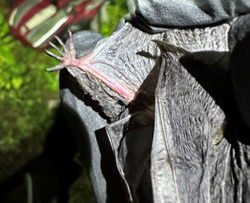
CEC ecologists performed qualitative analysis for thousands of bat calls that were identified to 10 species including state and federally listed northern long-eared bats, Indiana bats, tricolored bats, and little brown bats. Mist netting to capture bats was completed by five CEC crews over the course of two weeks. A total of eight (8) bat species were captured during mist net surveys including a Seminole bat (Lasiurus seminolus), which had not previously been recorded at Camp Atterbury. The CEC team affixed a radio-transmitter to 22 individual bats, and each bat was tracked for 7 days to their diurnal roosting locations and foraging areas. Each located roost tree required 1-2 emergence surveys to identify any maternity colonies and primary/alternate roosts. The data will be used to better inform training missions within Camp Atterbury from location and timing of training perspectives. The final report was submitted to the US Fish and Wildlife Service office in Bloomington, Indiana.